|
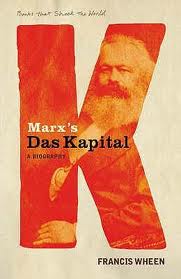
English Summary/英文概要: In this paperback edition Francis Wheen relates in vivid and engaging detail the story of Marx’s Das Kapital: ’As gripping and as readable as a first-rate thriller.’ A. C. Grayling, The Times
’The philosophers have only interpreted the world, in various ways; the point is to change it’, wrote Karl Marx in 1845. This is the essence of Das Kapital, a blazing exposé of the new capitalist world of the Victorian era, whose ideas would affect the lives of millions, and alter the course of world history.
In vivid detail, Francis Wheen tells the story of Marx’s twenty-year .ght to complete his unfinished masterpiece. Das Kapital was born in a two-room .at in Soho amid political squabbles and personal tragedy. The first volume was published in 1867, to muted praise, but, after Marx’s death, went on to influence thinkers, writers and revolutionaries, from George Bernard Shaw to Lenin.
Wheen’s brilliant and accessible book shows that, far from being a dry economic treatise, Das Kapital is like a vast Gothic novel, whose heroes are enslaved by the monster they created: capitalism. Furthermore, Wheen argues, as long as capitalism endures, Das Kapital demands to be read andunderstood.
Chinese Summary/中文概要: 《資本論》,是馬克思的著作,是以唯物史觀的基本思想為指導,通過深刻分析資本主義生產方式, 揭示了資本主義社會發展的規律,同時也使唯物史觀得到了科學的驗證和進一步的豐富和發展。《資本論》運用唯物史觀的觀點和方法,將社會關係歸結為生產關係,將生產關係歸結於生產力的高度,從而證明了社會形態的發展是一個不以人的意志為轉移的自然歷史過程。 “哲學家們以不同的方式去解讀世界;重點是要去改變它,” 卡爾•馬克思寫於1845年的。這是"資本論"中的精髓,公開的暴露了維多利亞時期的新資本主義世界,這一思想影響著成千上萬的生活,改變了世界歷史的進程。以生動的細節,法蘭西斯•威恩講述了馬克思嘔心瀝血二十年來未完成的這一巨作。“資本論”在(倫敦)索霍區的一間兩居室的公寓中誕生,在政治的混亂年代和個人的悲劇命運下催生而成。第一卷刊登於1867年,受到了默許的認同,但那是在馬克思逝世後,這一著作繼續影響著思想家,作家和革命家,從(英國劇作家)喬治•蕭伯納到列寧。威恩的這部傑出的和易懂的書顯示的遠遠不是枯燥無味的經濟論文,“資本論”如同偉大的哥特式小說,這個由資本主義創造出的巨人是被奴役的英雄。此外,威恩提出,只要資本主義長存,“資本論”就會有人去理解閱讀。(Sandy)
Awards/获奖情况: Rights sold: Australian, Canadian, Brazilian,
Dutch, Finnish, German, Greek,
Italian, Japanese, Korean, Russia,
Spanish, Turkish, US ’Exhilarating . . . A healthy corrective to those brought up to think of Marx’s work as rigid and doctrinaire . . . Wheen provides a vivid portrait of the man.’---Adam Sisman, Sunday Telegraph
|