|
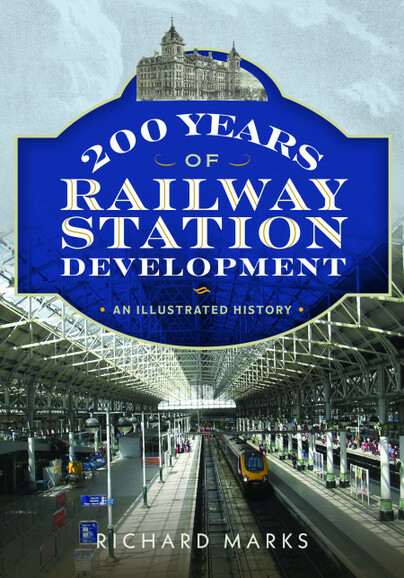
English Summary/英文概要: The railway station first appeared in Britain when the new railway companies began to carry passengers as well as the freight for which they had originally been built. From humble beginnings behind the bar in the local pub, to state of the art travel hubs, Britain’s railway stations have become a key part of society, even impacting how time is measured.
As Britain’s railway network grew, so did it’s stations. Competing companies arrived in the same town and built magnificent structures to attract passengers to their lines over those of their competitors. Architectural styles were as varied as the companies who commissioned them, although all were built to provide a feeling of permanence and dynamism to the local communities they served.
In this new introduction to the history of Britain’s railway stations, industrial and railway historian Dr Richard Marks examines why railway stations were built where and how they were. The impact of railway politics, rail heading and competition is clearly explained, to provide a new perspective on the railway station. Perhaps more than just a travel hub, the railway station was also place of sorrowful separations, and joyful reunions, new opportunity or departure to war something which is examined throughout the new book.
The evolution of railway stations, be they magnificent city centre statements or humble branch line or light railway facilities, is a fascinating and complex subject to which this new volume aims to provide a readable introduction.
Awards/获奖情况: I am pleased to review this book because it embraces an aspect of railway history and development which has often been ignored by other railway authors. The style of stations often reflected local architecture or, as railways developed, a particular Company style and wealth. Or in some cases a Company’s relative poverty resulting in very modest stations.
Railway stations have a story to tell and Richard Marks has used his book to tell that story. Indeed, Richard’s book includes a variety of stories ranging from the architectural majesty of terminal stations, often combined with a splendid hotel, to the very basic "halt" on some branch railways.I hope Richard’s book, and its many illustrations, will encourage travellers to look around them when waiting for a train!-Rob Shorland-Ball - Author
|